
Tag: irish volunteers

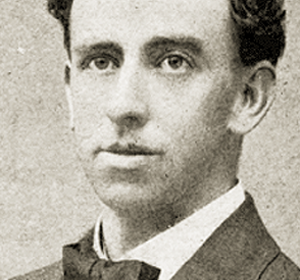
  • Thomas MacDonagh speech in Kilkenny City 05 March 1914

    Thomas MacDonagh speech in Kilkenny City 05 March 1914

    Transcribed by Larry Scallan

    Thomas MacDonagh:

    I am attending tonight  as the representative of the Provisional Committee of the Irish Volunteers, we have began in Dublin and have three thousand men drilling and preparing to serve their country in this cause. Kilkenny is the first place that we are looking to in Leinster and all Ireland, for help in this movement, and from the meeting tonight we know that we had not counted falsely in counting on Kilkenny. Personally, I owe a debt of gratitude to Kilkenny. It was in Kilkenny that I received my first baptism of Nationalism. Twelve years ago I came to Kilkenny and it was in the national spirit of this town that I first learned what it was to feel the patriotism of an Irish man. As Roger Casement has said the work we have to do is urgent and it is our duty to set about it immediately. Our business is to drill and prepare ourselves  to be efficient in the cause of Ireland. The Irish volunteers have been founded to secure the rights and liberties, common to all the people of Ireland. We have no rights and liberties to maintain at the present moment; we have been slaves in our own country. We were the only  people who are ineffective and unable to defend themselves against foreign aggression. If a foreign power came to this country favourable or unfavourable to Ireland, 60000 English territorials will be landed in this country. The Irish people will have to take them into our own homes, put them up, feed them and entertain them, to preserve Ireland, forsooth for the British crown. The people are not going to have that. Within this year we hope to enroll a quarter of a million men in the Irish volunteers. The body I represent is not a political body; it is an Irish body a National body. We have no party or religious test. Our system is a territorial system. People of different religions, of different political parties, will drill side by side. The battle had not yet been won, and it is possible the Irish People will have to make a great sacrifice, perhaps the greatest sacrifice of all. This organisation of the Irish Volunteers has grown out of an organisation instituted in this Country since the days of O’Connell, under such leaders as George Henry Moore, who, in 1861, advocated Irish Volunteers
    under the Fenian leaders; under Parnell and under the present leader of the Irish Party, and, to mention a leader more peculiarly my own, under the leaders of the Gaelic League . This movement is the culmination of those movements. The other night a Frenchman came to the hall in which my company was drilling. In France every citizen was a soldier, every man was trained to use arms, and this Frenchman could not very well understand how it was that the men he saw training in that company should think it necessary to spend their evenings drilling. I explained that it was only the other day we got permission to do such a thing at all, and my visitor expressed his astonishment, but said the patriotism that inspired us was magnificent. The Irish Volunteer movement is going to give an opportunity to the manhood of the country to prove it -self.

    There will be a difficulty in getting rifles but it will not require an enormous amount of money to buy them. No man is too old or too young to work for his country in this matter. At the end of this meeting those who want to enroll in the Irish volunteers, should go to the town hall and give in their names. Later on arrangements for drilling ect, will be made. This is a democratic organisation. We do not want this country to be governed by force or by corruption and if this Home Rule Bill is passed the country will be goverened for a long time by corruption, doles and bribes to every department of life in Ireland.
    It is not necessary to appeal  to my friends of the Gealic League to become Irish Volunteers. If a quarter of a million of Irishmen were trained and drilled in the use of arms, we will be able to give to Ireland whatever government we like.

    Transcribed from the Kilkenny newspapers March 1914.

  • Pat Corcoran Kilkenny Nationalist

    Patrick Corcoran a Kilkenny Nationalist     By Patrick Neary

    Patrick Corcoran or Pat as he was better known was born in 1875 at 69 Upper Patrick St.,
    where the family resided. The second son of Anne and Michael Corcoran,
    a whip maker by trade and a staunch Fenian who was involved in the 1867 rising.

    Pat served his time as a carpenter, winning many prizes at Feiseanna for his skill as a wood carver and set up his own business at the rear of the present day Troys Bar on the Ormonde Road.

    Pat became renowned for his artistic work, carved oak fire screens were among his more popular work and were usually given as Christmas or wedding gifts to his friends. He served on the Technical Institute Committee and was influential in Capt. Cuffes interest in setting up the Kilkenny Wood workers.

    A Sinn Fein activist from it’s inception much planning took place in his workshop. He was secretary of the St Patricks Brass and Reed Band and Chairman of the James Stephens G.A.A.Club. Kilkenny won the Railway Hurling Shield for the third time beating Tipperary in the final at St James Park in 1908, three years later the trophy was given into the custodianship of Kilkenny Corporation for display in the assembly room of the City Hall. Pat was given the task of designing and carving an oak show case for the Shield. His creation equalled if not surpassed the intricate designs of the Silver Shield, it was to be his crowning achievement. The shield and show case were for many years displayed in the City Hall but were handed over to the  County G.A.A. museum.

    After the 1916 Rising, 1000 troops were sent from Dublin to Kilkenny where martial law was declared and a military swoop of  Sinn Fein activists took place. Among those arrested was Ald James Nowlan, Tom Treacy, Tom Stallard , Pat Corcoran, Peter De Loughry and John Kealy. They were taken to Kilkenny Prison and next morning whilst been escorted through the City to the Railway Station for internment  in Britain, John Kealy collapsed and died in John St., Pat who was in poor health all his life was released from jail after a week and returned to Kilkenny.

    December 1918 a vacancy arose on the Corporation, Pat was asked to stand for election. He headed the poll with an overwhelming majority and was returned as an Alderman. Using his electoral success he secured the release of Mayor Peter De Loughry. He did not contest the 1920 election stating he could not save his soul and remain a member of the Corporation. His supporters prevailed on him to stand for the County Council elections in June 1920 and was successful as a Sinn Fein candidate.

    Eight weeks later in August 1920, Pat Corcoran died in Jervis Street Hospital, his remains were conveyed to Kilkenny by train where a large throng waited at the station to pay their respects. The coffin draped in the Republican colours was escorted to St Patricks church by the Irish Volunteers and members of other organisations.

    At two o clock the following afternoon the cortege moved off from the Church and processed through the City streets and on to Foulkstown Graveyard. All City business’ closed to enable employers and workers to pay their final tributes. The Tricolour flew at half mast over the City Hall while there were visible signs of mourning all along the funeral route. St Patricks Brass and Reed Band led the funeral. The Mayor, attended by the sword and mace  bearers walked in front of the hearse with members of the Corporation and Co. Council.

     Next came The Irish Volunteers from all parts of the County, and  Cumann na Mban also occupied a prominent place. The attendance of the general public was large, others represented were public bodies with whom the deceased was associated. James Nowlan a life long friend of Pat Corcoran travelled from Dublin. The funeral arrangements were in the hands of the City Battalion of the Irish Volunteers and were most creditably carried out. The local papers reported it as being the biggest funeral in Kilkenny for many years. At the subsequent Corporation and County Council meetings tributes were paid to the deceased for his work and dedication to his fellow citizens. Organisations of which he was a member also tendered their sympathy and tributes. Perhaps the greatest and lasting tribute to Pat Corcoran by Kilkenny was the construction of the houses on the Kells Road in 1940 and the Corporation naming it Corcoran Terrace.