Blog

  • 100 years Commemoration

    100 years Commemoration

     Commemorating 100 years of the Dáil and Women’s Right to Vote

    The Cathaoirleach of Kilkenny County Council, Cllr. Eamonn Aylward, led a commemoration of the centenary of the first meeting of Dáil Eireann on January 21st 1919 at County Hall on Monday January 21st. Cllr. Mary Hilda Cavanagh also spoke about the commemoration of women achieving a vote in the 1918 general election. The Flag Party, of the 3rd Infantry Battalion (James Stephens Barracks) raised the Irish Flag. The solemn celebration ended with the planting of two native oak trees in the grounds of County Hall.  The event was co-ordinated by the Heritage Office.

    Saluting the flag (photo Pat Moore)
  • 16 VOICES – Remembering 1916 – A Medical Perspective. St. Lukes Hospital

    16 VOICES – Remembering 1916 – A Medical Perspective. St. Lukes Hospital

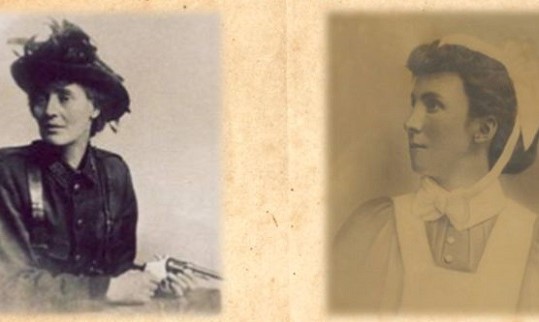
    Come and hear the Witness Statement of Nurse Aoife de Burca (Eva Burke) of her week in the GPO in 1916.

    Venue: the new reception Atrium at St Luke’s.

    Time: 8.00pm.

    Date: 31st March. Free Public Event.

    1916 Voices

  • 1916 Historical Theatre

    1916 Historical Theatre

    2016 is calling! This Spring Kilkenny is giving over it’s streets and some of it’s much loved historical buildings to a brand new and exciting piece of historically inspired, site specific theatre.

    The public of Kilkenny are invited on a journey through the streets of our beautiful city, from the Parade to the Court House, through doorways and slip ways, tracing the steps of Thomas MacDonagh and exploring the stories that are Kilkenny’s contribution to the 1916 Rising.

    Barnstorm Theatre are looking for talented community members to take them on that journey. Experience is a bonus but a simple desire to be involved is enough.
    Celebrating the rich heritage of Kilkenny City, this will be a piece of promenade theatre that no one can miss!

    Open casting sessions will be held in Barnstorm Theatre, Church Lane, Kilkenny, 12 noon to 3pm Saturday the 12th and Sunday 13th March (16 years +). Barnstorm Theatre are looking for talented individuals from all walks of life, so if performing isn’t your thing you are still welcome to offer your skills on the day, or get in touch.

    The production will run from Saturday 30th April to Tuesday 3rd May.

    Funded by Kilkenny County Council, Heritage Tales presents this unique 1916 Project, directed by Ita Morrissey and co-produced by Hannah McCormick.

    Barnstorm Poster

  • Kilkenny  Easter 1916 By Larry Scallan, Sabine O’ Dwyer

    Kilkenny Easter 1916 By Larry Scallan, Sabine O’ Dwyer

    As the year 1916 dawned local training in Kilkenny was dominated by the training instructions  given by the volunteers who had received the benefit of the collective organised by Captain O’ Connell earlier in 1915.

    By February Lt Edward O’ Kelly, an organiser from General Headquarters was in location in Kilkenny and he advanced training throughout the City and county. Lee Endfields were openly carried on route marches and weekly manoeuvres. Typical routes recorded started in the City, marching to Ballyfoyle, then to Muckalee and onto Johnswell where some tactical training was carried out. This may have taken the form of  drill, weapons training or practicing small unit attacks.

    On these manoeuvres volunteers always carried their own rations with the exception on fresh milk which would be purchased from a local farmer. No alcohol was ever consumed on exercise.  It is recorded that a small number of volunteers were discharged from the unit for having intemperate habits.

    On Patricks Day 1916 a company of Irish Volunteers paraded to mass in St Johns Church in uniform armed with their weapons and marching behind the Republican flag. It is most probable that the starting point for the march was James Park and then the route would have been up High St and John St. No doubt the local RIC kept a close eye on the event counting the rifles and recording the names of the volunteers on parade. It is also very probable that this is the first time that the Tri-colour was paraded through the City under an armed escort of Irish Volunteers.

    It needs to be clarified here that the leadership structure of the Kilkenny City Company of the Irish Volunteers was quite low key. The City Company was run by a committee comprised  mostly of members of the Irish Republican Brotherhood. The main leader, Mr Thomas Treacy from Dean St was seen as the key person and was the Company Commander. He was not however a member of the IRB. Given the level of secrecy maintained by the IRB it is highly unlikely that he would have known that so many of his subordinates were members.

    In early April, about 2 weeks before Easter, Tom Treacy was called out of Volunteer Hall (Kytlers Inn) and brought up along King St (now Kieran St), where he was introduced to Cathal Brugha who was sent from GHQ, Dublin to relay orders for a Rising that would be happening at Easter. Here we see the Captain of the Kilkenny City Volunteers being made aware of very secret information.  The orders relayed included the following-

    1. General manoeuvres were to be planned for Easter Sunday
    2. To proceed with all available men and weapons and proceed via Borris to Scallop Gap on the Wexford border and link with the Wexford Volunteers
    3. No independent active service operations were to be engaged in until the link up with Wexford had been made
    4. Captain Ginger O’ Connell from GHQ was to be in command of all units in the county and all orders were to be taken from him
    5. This unity of command was to be maintained after the link up was made


    These orders were very clear and unambiguous. Ginger O’ Connell was to command all activities in the Kilkenny-Wexford area. His orders were to be obeyed at all times. This order would have far reaching effects as Easter Week went on.

    At this stage, two weeks before the Rising the Kilkenny City Company had around 60 members. Treacy knew exactly what weapons were in possession of the City Company. There was a shortfall of 30 firearms. He informed Bruagha of this. Bruagha then informed Treacy that there would be a supply of weapons and ammunition available for collection from Dr Dundon in Borris.  At this stage Treacy was informed that a shipment was expected and further weapons and ammunition would be available (this is most likely from the weapons expected from the AUD which would be scuttled off the Kerry coast).

    It is also indicated by Treacy that Bruagha also gave these instructions to Peter Deloughrey and Patrick Corcoran, the Kilkenny contacts with Dublin and  both members of the IRB. Treacy commenced issuing instructions to all members of the Kilkenny City Company regarding the upcoming manoeuvres for Easter Sunday while maintaining operational security. Everyone was informed to parade on Sunday with full equipment, rations and bicycles.

    Around this week a number of important movements of explosives occurred which were to directly support the Rising. Firstly, on Spy Wednesday a shipment of explosives was moved from Wolfhill Coalmine by  Peter Deloughrey, James Lawlor and Eamon Fleming from the Swan, Laois. The explosives were delivered to a man called Patrick Ramsbottom in Portlaoise. They were then sent to Dublin. On Good Friday the second shipment was moved from Skeeter  Park Cleariestown Wexford by Peter Deloughrey  and Thomas Murphy and sent to Dublin for use in the Rising,

    Over the years these shipments of explosives have been undervalued in the events of the Easter rising. Here we have men willing to put themselves in harm’s way, transporting explosives throughout the South East without fear of the consequences of capture. No doubt they were armed during these operations and aware of the repercusions  if they were to be stopped by Crown Forces.

    Easter Sunday arrived and at the appointed time of 12 noon at Volunteer Hall, all volunteers arrived. Thomas Treacy was already aware of the attraction of the plan because he had read the Sunday Independent that morning. Treacy held an orders group with his company officers and it was decided that if no official message was received that he would dismiss the assembled volunteers by 2pm. All volunteers were ordered to parade again at 8pm. Except for a few key people, the main body of volunteers were still unaware of what was planned. The key players stayed behind and discussed the situation in some detail at this stage. Officers from the countryside company were in attendance.

    Pat Corcoran had been in Dublin all Easter Sunday. He arrived back in the City and in the company of Captain O’ Connell, he informed those present that everything was off. All men were dismissed, told to go home and be prepared to form up again on Easter Monday morning.

    It was also decided that Pat Corcoran and Peter Deloughrey would carry out a resupply mission on Monday morning when they would drive to Dr Dundon’s house in Borris and take control of the assorted weapons being stored for their use.

    At around 2pm Lt Pierce Brett brought word to Tom Treacy that hostilities had broken out in Dublin. This word most likely came from a train passenger. The information however was confused and at 7pm all the company were mustered in the area of Stallards Gardens near Asylum Lane.  This was the location chosen for the delivery of the weapons brought by car from Carlow. This  consisted of around 30 single barrelled shotguns and assorted ammunition. It must be again mentioned here that this movement of weapons was taking place at great risk of capture by Deloughrey and Corcoran. The safe delivery of the weapons and their issuing to Company volunteers insured that The Company volunteers were armed. It is also an incident of Kilkenny men being on active service on Easter Monday in the broad sense, even if they fired no shots they definitely put themselves in harm’s way.

    Tom Treacy estimates the strength of the Crown Forces in the City as being around 440 men. 400 soldiers in the military barracks and 40 RIC Constables deployed between the Johns Street HQ and Parliament St station. He also states that they were fairly quiet during the week remaining in or close to the barracks. By this stage it was obvious that the original orders given by Cathal Bruagha a few weeks earlier were not going to be carried out. Captain O’ Connells arrival in the city on Sunday evening should have been the catalyst to send the Kilkenny Company on active service. It becomes obvious here that O’Connell is aligned with MacNeil and Bulner-Hobson. He had it seems confirmed to Wexford Volunteers in Enniscorthy  prior to arriving in Kilkenny that he was not going to undermine McNeills orders to cancel the Rising. It would seem that the sinking of the AUD confirmed their reluctance to enter an unwinnable fight.

    On Wednesday morning O’ Connell dispatched Jimmy Lawlor on a motorbike journey to confirm the activities in Limerick. Lawlor had an eventful journey being stopped a few times at RIC checkpoints. Lawlor confirmed that Limerick was not out. The volunteers paraded that evening and some lapsed members returned to the company. O’ Connell would preside over the orders session and it was really his control which had effect in Kilkenny during the Thursday and Friday meetings.

    News of the surrender of the Irish Volunteers arrived in Kilkenny at about 3pm on the Saturday afternoon. All the weapons held by the members were stowed away safely and the volunteers were sent home.

    As with the rest of the country, arrests of the key people commenced soon after the surrender in Dublin. Ginger O’ Connell was the first man arrested on May 3rd. On May 4th, Peter Deloughrey and Alderman James Nowlan were arrested and placed in Kilkenny Gaol.


    So ended any hope of the rising happening in Kilkenny . Arrests would go on for a number of days with over 30 Volunteers being deported to different locations in England and Wales.

  • Kilkenny 1916-2016 Centenary Programme

    Kilkenny 1916-2016 Centenary Programme

    The Kilkenny 1916-2016 Centenary Programme was formally launched on 11th December 2015, in Rothe House Kilkenny, by Minister Ann Phelan.  Kilkenny County Council has taken a pro-active role in embracing the Community strand of the Seven Strand National Programme for Ireland 2016, with the appointment of a cross party Commemoration Committee.  Community participation is at the forefront of Kilkenny’s ambitions for 2016.  Events across the County are being supported in a manner that will assist local voluntary groups to ensure that their own commemoration ceremonies and events are arranged to a high standard with the maximum participation and attendance.  For further details download a copy of the Kilkenny 1916-2016 Centenary Programme.

  • Dublin Rising 1916-2016

    Dublin Rising 1916-2016

    Dublin Rising 1916-2016 is a site built by Google in partnership with Ireland 2016, the State Centenary Programme to remember 1916, to reflect on the Republic 100 years on, and to re-imagine our future.  The aim is to enable anyone, anywhere to participate in the 1916 Centenary, through online access to historical and cultural resource material.  On this virtual tour, you can explore locations around Dublin city and discover the events of the 1916 Rising. See images from the time, listen to witness statements and learn about the people who shaped Ireland’s future. Hear how history was made, in the company of narrator and guide for the tour, Dubliner Colin Farrell.  Visit Dublin Rising 1916-2016.

  • Thomas MacDonagh speech in Kilkenny City 05 March 1914

    Thomas MacDonagh speech in Kilkenny City 05 March 1914

    Transcribed by Larry Scallan

    Thomas MacDonagh:

    I am attending tonight  as the representative of the Provisional Committee of the Irish Volunteers, we have began in Dublin and have three thousand men drilling and preparing to serve their country in this cause. Kilkenny is the first place that we are looking to in Leinster and all Ireland, for help in this movement, and from the meeting tonight we know that we had not counted falsely in counting on Kilkenny. Personally, I owe a debt of gratitude to Kilkenny. It was in Kilkenny that I received my first baptism of Nationalism. Twelve years ago I came to Kilkenny and it was in the national spirit of this town that I first learned what it was to feel the patriotism of an Irish man. As Roger Casement has said the work we have to do is urgent and it is our duty to set about it immediately. Our business is to drill and prepare ourselves  to be efficient in the cause of Ireland. The Irish volunteers have been founded to secure the rights and liberties, common to all the people of Ireland. We have no rights and liberties to maintain at the present moment; we have been slaves in our own country. We were the only  people who are ineffective and unable to defend themselves against foreign aggression. If a foreign power came to this country favourable or unfavourable to Ireland, 60000 English territorials will be landed in this country. The Irish people will have to take them into our own homes, put them up, feed them and entertain them, to preserve Ireland, forsooth for the British crown. The people are not going to have that. Within this year we hope to enroll a quarter of a million men in the Irish volunteers. The body I represent is not a political body; it is an Irish body a National body. We have no party or religious test. Our system is a territorial system. People of different religions, of different political parties, will drill side by side. The battle had not yet been won, and it is possible the Irish People will have to make a great sacrifice, perhaps the greatest sacrifice of all. This organisation of the Irish Volunteers has grown out of an organisation instituted in this Country since the days of O’Connell, under such leaders as George Henry Moore, who, in 1861, advocated Irish Volunteers
    under the Fenian leaders; under Parnell and under the present leader of the Irish Party, and, to mention a leader more peculiarly my own, under the leaders of the Gaelic League . This movement is the culmination of those movements. The other night a Frenchman came to the hall in which my company was drilling. In France every citizen was a soldier, every man was trained to use arms, and this Frenchman could not very well understand how it was that the men he saw training in that company should think it necessary to spend their evenings drilling. I explained that it was only the other day we got permission to do such a thing at all, and my visitor expressed his astonishment, but said the patriotism that inspired us was magnificent. The Irish Volunteer movement is going to give an opportunity to the manhood of the country to prove it -self.

    There will be a difficulty in getting rifles but it will not require an enormous amount of money to buy them. No man is too old or too young to work for his country in this matter. At the end of this meeting those who want to enroll in the Irish volunteers, should go to the town hall and give in their names. Later on arrangements for drilling ect, will be made. This is a democratic organisation. We do not want this country to be governed by force or by corruption and if this Home Rule Bill is passed the country will be goverened for a long time by corruption, doles and bribes to every department of life in Ireland.
    It is not necessary to appeal  to my friends of the Gealic League to become Irish Volunteers. If a quarter of a million of Irishmen were trained and drilled in the use of arms, we will be able to give to Ireland whatever government we like.

    Transcribed from the Kilkenny newspapers March 1914.

  • James Lalor Kilkenny Irish Volunteer Leader 1914-1922

    James Lalor Kilkenny Irish Volunteer Leader 1914-1922

    James Lalor was born in 1888 in Kilkenny City. He was sworn into the IRB in 1905 as a seventeen year old by Peter deLoughry. At this time there was a resurgence of the political and military aims of the organization in the county. At the age of 26 he joined the Irish National Volunteers on 5 March 1914, when a Kilkenny City Company was formed during a large meeting was held on the parade. All new volunteers were enlisted in the town hall on the night. Around this time he was working with his father in his building business in Friary Street, Kilkenny.

    Following the split in the Volunteers, Lalor was appointed Section Commander of No. 1 Section of the Irish Volunteers in Kilkenny, during this time he was very active in supervising training as well as attending various training exercises and camps around the region . After mobilising for Easter 1916 he was sent to limerick By Commandant Ginger O Connell to assess the situation there, this task involved making a round journey on a motorcycle. He was arrested on 5 May and eventually imprisoned in Frongoch Internment Camp in North Wales. He was released in August 1916.

    During the summer of 1917 Lalor assisted in the organisation of Volunteer companies in a number of towns and villages in county Kilkenny. Once this organisation was underway a decision was made to form four battalions and James Lalor was elected Vice O/C or Vice Commandant of the Kilkenny city battalion. In 1918 further reorganisation of the Volunteers led to the formation of the Kilkenny Brigade and Lalor was elected Brigade Vice-Commandant. Towards the end of 1918 he was appointed Director of Elections for the Sinn Féin candidates in Kilkenny city and county. He took part in the deliberate and planned assault on Hugginstown RIC Barracks on 8th March 1920. This attack was successful and RIC constable Ryan was fatally wounded during the operation. Sometime after Lalor was arrested and detained in Kilkenny jail he was transferred to Cork Prison and from there to Belfast Prison where he took part in a hunger strike. After fifteen days he was transferred to the Union Hospital and then home to Kilkenny. Lalor was arrested again in September 1920 and kept in custody in Ballykinlar Camp until the general release a few days after the signing of the Treaty on 6 December 1921. James Lalor remained a committed Republican throughout his life. He acted on the Brigade Committee facilitating applications for Military Service Pensions as well as travelling to Dublin to attend Advisory Committee meetings to discuss the particulars of cases made by members of the Kilkenny Brigade. He provided references and advice to members of the IRA companies in Kilkenny. Between 1935 and 1936 he acted as one of the Treasurers for the Hennessy-Dermody memorial commemorating two volunteers who were killed during an encounter with British forces on Friary Street Kilkenny city on the 05th March 1921. He was also involved in Republican associations such as the Old IRA Comrade’s Association and Irish Republican Army Federation, attending meetings and involving himself in administrative matters at a local level. He maintained a lifelong interest in military matters and served as District Engineer in the Kilkenny Local Defence Force during the Emergency.

    James Lalor died on and is buried in Tulla cemetery Treecastles.

  • James Nowlan by Paddy Neary.

    James Nowlan by Paddy Neary.

    Ald JAMES NOWLAN and NOWLAN PARK

    James Nowlan’s family lived in Upper Patrick St., for a time his father
    Patrick, a Cooper by trade worked in Sullivans Brewery James St. but
    due to a down turn in the Brewing business the family moved to
    Monastereven, Co.Kildare where James was born in 1862.
    The family later returned to Kilkenny and took up residence at no 2
    Troy’s Gate, where James lived for most of his life and trained
    as a cooper in Sullivans Brewery.
    A member of the Gaelic League, he was a life long supporter of the
    Irish language movement and a member of Sinn Fein from its
    foundation in 1905. He was elected an Alderman of the Corporation in
    1898 and was returned as an Alderman at each election until 1920
    when he moved to Dublin.
    Elected President of the G A A in 1901 he held that position until 1921
    when he retired, the longest serving President of the association.
    It was said he attempted to steer the G A A on a more Republican path
    and in 1913 was quoted as encouraging members to join the Irish
    Volunteers and so learn to shoot straight.

    After the 1916 rising he was one of the Kilkenny group arrested in the
    military swoop and was interred in Frongoch, Wales until August of
    that year, on his release he continued with his G A A and Civic duties.
    Oct. 1919 he was arrested in Cork for been in possession of a revolver
    and cartridges. Despite pleading he needed the arms to protect G A A
    gate money, he was sentenced to 28 days imprisonment. He died in
    June 1924 leaving his estate of £862 to Luke O Toole Gen. Sec of the G
    A A and was buried in Glasnevin Cemetery.
    Kilkenny G A A did not have a stadium of it’s own and games were
    played at various venues in the City. The County Board approached
    the Agricultural Society for the use of James’ Park in 1896, permission
    was given for Sunday use but 12 months later the rent was raised by
    50% This caused the G A A to abandon the venue and did not return
    until 1906. When good relationships were restored, many club and
    intercounty games took place at James Park including the 1906 All
    Ireland hurling final. Eventually a field was purchased in 1927 for £700
    from Peter Corcoran of John St, and was named Nowlan Park. Club
    games were played on the new pitch almost immediately. The official
    opening took place on Aug. 26th 1928. To mark the event the All
    Ireland Hurling semi final was played between Cork and Dublin.
    Cork winning easily on a 5-3 to 0-2 score line, before an attendance of
    23,000. On the eve of the game the Cork team was met at the Railway
    Station by a large crowd and escorted to the Metropole hotel by St
    Patricks and St Riochs bands, the crowd and bands then returned to
    the Station greeted the Dublin team did a circuit of the city streets
    escorting them to the Central hotel. The official opening was performed
    by the President of the G A A. Sean Ryan The Corporation attended
    led by the Mayor Ald. Jack Magennis. Bishop Patrick Collier
    after blessing the grounds said he hoped this field for many years would be the
    scene of clean manly Irish games and that commercialism and
    professionalism which ruin games would be absent from games played
    in this Park.
    The national papers were not impressed with the opening stating
    the approach roads and ground were in a muddy condition. The
    stewarding arrangements left a lot to be desired, gates been closed an
    hour before the game and people who had purchased side line tickets
    could not gain admission. It was noted some players were forced to
    climb over fencing to gain entry to the pitch.
    Major work was undertaken in 1947/48,with the erection of a stand.
    With the demolition of Kilkenny Jail, large quantities of rubble were
    available and Paddy Grace county board secretary bought the rubble
    for 10 shillings a lorry load, using it to enlarge the banks.
    To day Nowlan Park has a total capacity for 24,000 patrons of which
    17,000 are seated, and stands as a tribute and memorial to Ald James
    Nowlan.

  • Frederick William Hall VC Kilkenny’s Victoria Cross winner of WW1

    Frederick William Hall VC Kilkenny’s Victoria Cross winner of WW1

    FREDRICK HALL VC 1885 – 1915

    CSM Frederick Hall VC in his Canadian uniform
    CSM Frederick Hall VC in his Canadian uniform


    Fredrick Hall was born in James Stephens Barracks, Kilkenny on 21 February 1885.

    He spent a number of years in Kilkenny before moving with his family to England. His father was the Drum Major with the 5th Militia Battalion Royal Irish Regiment when he was born. He enlisted with the 8th Battalion Canadian Expeditionary Force on 23 Sept 1914 and he embarked with his unit for England on 03 Oct 1914.Regt No 1539 CSM Hall was killed in action on 24 April 1914 while attempting to recue one of his soldiers from no man’s land.

    As a result of this action he was granted the Victoria Cross “For most conspicuous bravery and devotion to duty”.

    This is his story

    EARLY LIFE

    Frederick William Hall was born in the military barracks Ballybought street Kilkenny City, Ireland on 21st of February 1885, the son of a British Army career soldier Frederick Hall Senior, who was the Drum Major with the 5th Militia Battalion of The Royal Irish Regiment at the time. The Family resided in Patrick Street just off the City’s main street and about one mile from the barracks. His mother was Mary Annie Hall (nee) Finn and he also had two sisters Ada Catherine, who was born in Belfast in 1881, and Louisa born in Brentwood, Essex in 1884.

    FIRST SERVICE

    Two weeks shy of his sixteenth birthday Frederick joined the Scottish Rifles in on 4th February 1901 as a boy soldier with the rank of Bandsman.  He rose through the ranks and he was promoted Sgt on 14 March 1913. He retired from the Scottish Rifles two months later on 20th May 1913.

    SECOND SERVICE

    After retiring from the British army he immigrated to Winnipeg and he very quickly signed up with the local militia unit which was 106th Winnipeg Light Infantry Battalion. When the First World War broke out he joined the 8th Canadian Infantry Battalion which was organized at Valcartier under Camp Order 241 of 2 September 1914. The battalion was composed of recruits from Winnipeg and from the 96th Lake Superior Regiment of the Active Militia Battalion as well as from other local militia regiments. His first appointment was Corporal in Kilo (K) Company where his Company Commander was Lt Charles Blake. Yet again he rose quickly through the ranks, being promoted to Company Sergeant-Major on 01 December 1914.

    MOBILISATION

    The 8th Canadian Infantry Battalion was commanded by Lieutenant-Colonel L.J. Lipsett who was a native of Ballyshannon, County Donegal. Louis-James Lipsett was commissioned as a 2/LT in the Royal Irish regiment in 1885 and saw service in India and South Africa during the Boer war. He was instrumental in moulding the battalion in the short time available and managed to overcome the logistical and administration problems associated with mass recruitment. The battalion embarked at Quebec on 1st October 1914 aboard FRANCONIA, steaming on the 3rd October as part of the largest flotilla ever seen disembarking from Canada. The flotilla arrived England on 14th October 1914, disembarking in Plymouth. The strength of 8th Canadian Infantry battalion was 47 officers and 1106 other ranks when it reached its new home, and along with the rest of the 2nd and 3rd Brigades settled into the West Down, South Camp on Salisbury plain.

    TRAINING

    The Canadian Brigades quickly established a training routine on Salisbury Plain. However, the weather deteriorated very quickly and indeed the miserable weather turned training into a drudgery. There were no means of drying clothing, and men who ploughed through ankle-deep mud all day had to let their rain-soaked uniforms dry on their backs.  This would undoubtedly have caused many problems for CSM Hall who was responsible directly for the training administration and conduct for over one hundred of the battalion’s soldiers. Formation size training commenced only after the initial three months of training which included trice weekly route marches, range time and platoon level tactical training. The formation size training culminated with two weeks of battalion and brigade sized exercises. The Canadian division was now ready.

    FRANCE

    The 8th Canadian Infantry disembarked in France on 13th February 1915, becoming part of 2nd Canadian Infantry Brigade, 1st Canadian Division. Routine was quickly established culminating with the move, one Platoon at a time, into quiet sectors of the Western Front to accustom them to trench routine. The indoctrination was practical and thorough. From Company Commanders down to Private soldiers everyone was associated with a corresponding member of the host unit for 48 hours of individual training. There then followed 24 hours of platoon training during which each Canadian platoon was made responsible for a definite length of trench as part of the company forming the regular garrison. Throughout that week battalion commander Lt Col Lipsett, his officers and NCOs learned the many details of administration in trench warfare. On the 20th February the Commander-in-Chief of the British Expeditionary Force, Field Marshal Sir John French, inspected units of the Division.

    On the 28th of February orders came for the 1st Division to take over a section of the First Army’s front. At 1100 hrs the relief of the 7th British Division began and by the 3rd March the Divisional Commander – General Alderson had assumed responsibility for 6400 yards of line in front of Fleurbaix. This was a quiet time and after 10 days the Division rotated to the rear to rest. During this period there were daily work parties required for routine trench building and repairing trench systems on the front line.

    GAS, GAS, GAS!

    On the 15th April the 8th Canadian Infantry Battalion took over a section of front line trench from the French. This was a series of unconnected trench systems which were poorly positioned and lacked any real protection from barbed wire defences. The next few days were spent improving the position. On the 22nd April, the day of the first gas attack on the Western front, the standard German shelling caused over forty casualties in the 8th Canadian Infantry battalion. However no gas was released in the Canadian area of operations and no German attack occurred along the line.

    At this time the line held by 2 Canadian Infantry Brigade (CIB) ran from Berlin Wood across to the Passchendale road and NW along the valley of the Stroombeek River. The 5th Canadian Infantry battalion on the left followed up by the 8th Canadian Infantry battalion on their left. The 8ths left was the 15th Canadian Infantry battalion, 3rd CIB. On the night of the 23rd April all of the soldiers of the 8th Canadian Infantry battalion were issued with improvised gas masks. This offered some protection against this new weapon which had a devastating effect on soldiers.

    Three companies of the 8th Canadian Infantry battalion were deployed along the front line. Half of C Coy was held to their rear as immediate support. The remaining half company of two platoons commanded by Captain Bertram and Lt O Grady were held in reserve by Lt Col Lipsett close to Boetleer farm. CSM Hall was second in command of Lt O Grady’s platoon.

    24TH APRIL 1915

    At 0330hrs on 24th April the Germans launched a heavy barrage and at 0400 hrs a gas attack was released. It drifted across no man’s land towards the Canadians. Lt Col Lipsett realised the gravity of the situation and he had heavy artillery called down on the German advance causing heavy casualties. The gas was now having its effect on the Canadian soldiers. The improvised respirators organised the previous evening were giving some protection and allowed the defenders to bring accurate small arms fire on the attackers. The Canadians’ Ross rifle was however jamming in large numbers and soldiers could be seen trying to re-cock their rifle with their feet.

    The German assault broke through the area between the 15th and 8th Canadian Infantry battalions. It was here that Lt Col Lipsett committed his immediate reserve of half company strength to plug this gap of over 100m in length. Very few of the C Coy reserve reached their objective and those that did were met by the appalling sight of soldiers exposed to gas in large numbers. The order was given that Graffenstaffel Ridge had to be defended at all costs. Lt Col Lipsett now committed his last remaining reserve to plug the gap which still remained on the left flank. The time now was 0900hrs.

    THIRD TIME UNLUCKY

    Under heavy fire the platoons made their way forward and Lt O Grady was killed crossing some open ground. CSM Hall now took command of his platoon and he led his men over almost 1500 meters to the front line positions. On reaching the forward position and as part of his reorganisation and consolidation phase he discovered a number of his men wounded and located to his rear. He quickly went back to collect two wounded men and one after another and brought them to the relative safety of the trench. Hearing the cries of a third man CSM Hall, together with Cpl Payne and Pte Rogerson, climbed out of their trench and attempted to rescue the wounded man who was lying on an exposed bank 15 meters from the front line. Both Payne and Rogerson were wounded and could not further assist Hall. After a short rest CSM Hall crawled out to the wounded man. After reaching him and lying prone he managed to get the wounded soldier on his back. Having become a bit disorientated he raised his head to confirm his position. A bullet hit him in the head, fatally wounding him. Moments later the wounded man was also killed. For this act of courage CSM Hall was awarded the Victoria Cross.

    CSM F. Hall London Gazette Citation.


    On 24th April, 1915, in the neighborhood of Ypres, when a wounded man who was lying some 15 yards from the trench called for help, Company Serjeant-Major Hall endeavored to reach him in the face of a very heavy enfilade fire which was being poured in by the enemy. The first attempt failed, and a Non-commissioned Officer and private soldier who were attempting to give assistance were both wounded. Company Serjeant-Major Hall then made a second most gallant attempt, and was in the act of lifting up the wounded man to bring him in when he fell mortally wounded in the head.”

    The Canadian soldiers held the day. Most of the battalions returned from the front lines with less than 25% of their effective strength remaining at the end of their period on the front line. Heroic such as those of CSM Frederick Hall were commonplace every day along the front line. However, few acts of heroism happened at such a critical time as that of the selfless actions of CSM Frederick Hall. His total disregard for personal safety and his willingness to make the ultimate sacrifice for his subordinates was of immense importance and is seen as a critical moment in the 8th Canadian Infantry Battalions’ determination to hold their positions.  Had the German attack been successful the strategic outcome may have led to a very different ending to the war.

    IN THE END

    The CEF eventually came to number 260 separate numbered Infantry Battalions, 13 regiments of mounted rifles, and many units of the supporting arms including 13 railway troop battalions, 5 Pioneer Battalions, Field and Heavy Artillery, field ambulance, medical, dental, forestry, labour, tunnelling, cyclist, and service units. By war’s end, a Canadian Machine Gun Corps had been formed, and many soldiers had experience flying with the British Royal Flying Corps before it became a separate service known as the Royal Air Force.

    The 8th Canadian Infantry Battalion returned to England on 23rd March 1919, disembarked in Canada on 4th May 1919, was demobilized on 8th May 1919, and was disbanded by General Order 149 of 15th September 1920. The Canadian Expeditionary Force suffered 60,661 dead during the war (9.28% of the 619,636 who enlisted). Many of these soldiers were Irish born and records show that at least 21 were born in county Kilkenny.

    A KILKENNY HERO

    Frederick Hall always gave his birth place as Kilkenny, Ireland. While he may have lived in Kilkenny for a brief number of years it is very fitting that he is now remembered as a Canadian soldier from Kilkenny.  Arguably he exceeded his duties of a CSM; he went above and beyond his duty to look after his soldiers and therefore he is rightly remembered as an outstanding soldier.

    On the 24th of April 2015, His Excellency Mr Kevin Vickers, Ambassador of Canada planted a maple tree honouring the memory of Frederick Hall VC in Stephens Barracks at the rear of the current day Ncos Mess very close to where he was born.